6 Best Life Planners Worth Trying in 2026, by Format and Real Cost
Best life planner picks for 2026: Erin Condren, Passion Planner, Notion, apps, Google Sheets and a $9 file, with prices checked 8 Oct 2026 and who each suits.
By Ultimate Life Organizer by Cosmo Suite · Editorial policy
Published · 9 min read
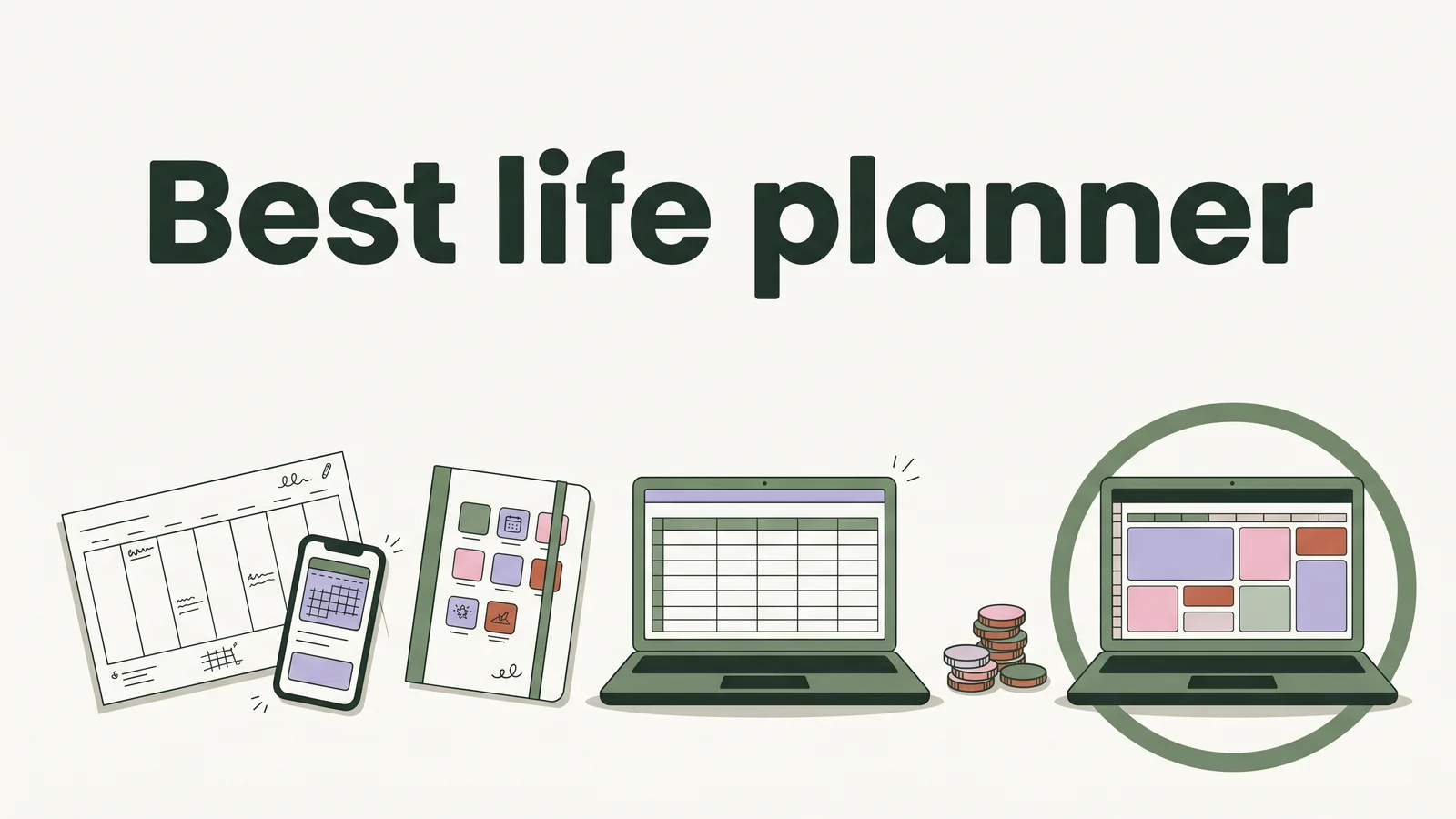
The best life planner is the one you still open in month three. That depends less on the brand than on how many places it asks you to update. A paper planner, a pair of apps, a Notion page, a Google Sheets file and a ready-made spreadsheet all work. They fail for different reasons.
The short answer: paper suits people who think by writing, apps suit people who live on reminders, and one connected file suits people whose money, tasks, meals and goals are scattered. Below are six picks, what each costs over three years on the vendors' own pages, and who should skip it.
Key takeaways
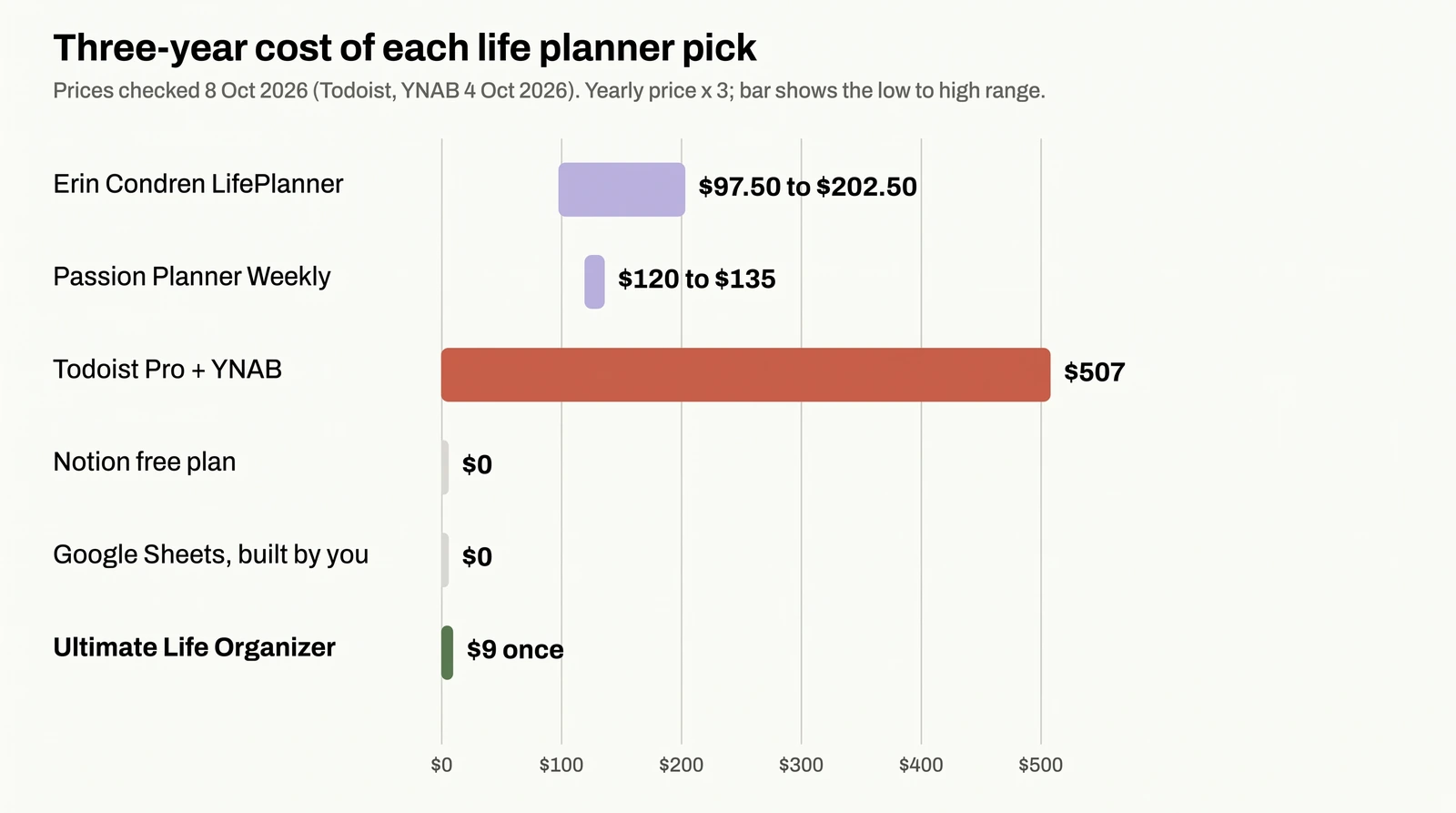
- Over three years, a yearly paper planner costs $97.50 to $202.50 and two paid apps cost $507. Notion and Google Sheets cost $0 plus your setup time. A ready-made file costs $9.
- Each pick below says who it suits and what you give up.
- Count how many places you would retype one bill. The fewer, the longer a planner survives.
Best Life Planners at a Glance
These six picks cover the main formats. The right one is the one that matches how you already plan, not the one with the longest feature list.
| Pick | Format | Price (checked 8 Oct 2026) | Three years | Best for |
|---|---|---|---|---|
| Erin Condren LifePlanner | Paper, dated or undated | $32.50 to $67.50 | $97.50 to $202.50 | Planning by hand, with style |
| Passion Planner Weekly | Paper, goal-first | $40 to $45 | $120 to $135 | Turning goals into weekly steps |
| Notion free plan | Pages and databases | $0 | $0 | People who like building |
| Todoist Pro + YNAB | Two apps | $169 a year | $507 | Phone reminders, bank-linked budgeting |
| Google Sheets, built by you | Spreadsheet | $0 | $0 | Tinkerers who enjoy formulas |
| Ultimate Life Organizer | Ready-made Excel and Google Sheets file | $9 once | $9 | One place for money, habits, meals, goals |
Three-year totals multiply the yearly price by three, because a dated paper planner runs out after 12 months. Apps are priced on their yearly plans.
How Did We Choose These Life Planners?
We picked one representative example per format that a typical buyer meets first, then priced each directly from the vendor's own page. Three questions decided the list: how many places each pick makes you update, what it costs over three years, and who it is wrong for.
We did not rank by popularity or star ratings, because we have no way to verify those. Where a tool was not priced on an official page we could open, it is not in the list.
What Should the Best Life Planner Include?
A life planner is one system, on paper or on a screen. It holds your calendar, money, habits, meals and goals together, so you plan the week from a single view. Judge every candidate by how much of your life it covers without sending you to another tool.
Life admin is a daily load, not an occasional chore. On an average day, 81% of people did household activities, according to the Bureau of Labor Statistics' American Time Use Survey for 2025. That is why the planner you choose has to be quick to update. One that demands extra administration will gradually be ignored.
A recurring entry is a bill, paycheck or chore that you type once and that then repeats on a schedule. It is the feature that separates a planner you can realistically maintain from one you rebuild every single month. Budget vs actual is a side-by-side of what you planned to spend and what you spent in each category. It needs a tool that does the adding for you.
A reasonable checklist for comparing any planner has five lines:
- Money: income, bills, subscriptions and a budget vs actual view.
- Time and tasks: a monthly and weekly calendar and a task list.
- Habits and health: a few daily habits, plus weight or water if you track them.
- Meals: a weekly plan and the grocery list that goes with it.
- Goals: one to three yearly goals, cut into dated steps.
Which Life Planner Fits Which Kind of Planner?
Each pick below fits one kind of planner and fails another, for example a paper book that suits a writer and frustrates anyone who needs totals. Read the What you give up line before you look at the price, since that line usually decides whether the planner survives.
1. Erin Condren LifePlanner: best for planning by hand
Erin Condren sells dated weekly planners in several bindings. On 8 October 2026 the LifePlanner range ran from $32.50 to $38.50 for a softbound book. An A5 coiled one was $57.50 to $62.50, and a 7x9 coiled one $60.50 to $65.50. Vegan leather covers were $65.50 to $67.50. Dated softbound planners cover 12 months, so you buy a new one each year (Erin Condren softbound page).
Best for: people who plan by writing and like choosing a layout, such as horizontal, vertical or hourly.
What you give up: maths and memory. Budgets get added up by hand, and recurring items get rewritten every week.
2. Passion Planner: best for turning goals into weekly steps
Passion Planner builds its pages around a goal roadmap and a reflection prompt for every week, which makes it a deliberate, structured choice for anybody who wants a paper routine. Its 2027 Weekly planners were $40 to $45 on 8 October 2026, and first-time buyers get a 90-day refund window (Passion Planner). Digital and undated versions exist too.
Best for: people with a few clear goals who want a weekly routine to move them forward.
What you give up: anything numeric. There is no budget view and nothing fills in by itself.
3. Notion free plan: best for people who like to build
Notion's free plan costs $0 for individuals with unlimited pages and blocks, and files up to 5 MB (Notion pricing). The Plus plan is $10 per member per month, which you do not need for a personal life planner. You can build databases for tasks, habits and goals, or start from a template.
Best for: people who enjoy designing their own system and are happy to maintain it.
What you give up: considerable time. A half-built Notion setup is a common way for a planner to die. Sums like budget vs actual need formulas you write yourself.
4. Todoist Pro plus YNAB: best for reminders and bank-linked budgeting
A pair of focused apps does two jobs well. On 4 October 2026 Todoist Pro was $60 a year (Todoist) and YNAB $109 a year (YNAB). That is $169 a year, or $507 over three years. Apps are the right call when you want a push reminder at 8 a.m., or a shared grocery list with a partner, for instance.
Best for: people who live on their phone and want alerts and sharing.
What you give up: one view. Tasks sit in one app, money in another, and meals and habits in a third or nowhere.
5. Google Sheets, built by you: best for tinkerers
Google Sheets is free with a Google Account (Google Workspace FAQ). A budget, a monthly calendar, a habit log and a goal list are all within reach of someone comfortable with formulas.
Best for: people who like spreadsheets and have a free weekend.
What you give up: the first weeks. Most of the effort goes into layout and formulas, and the planner is not useful until they work.
6. Ultimate Life Organizer: best for one place, already built
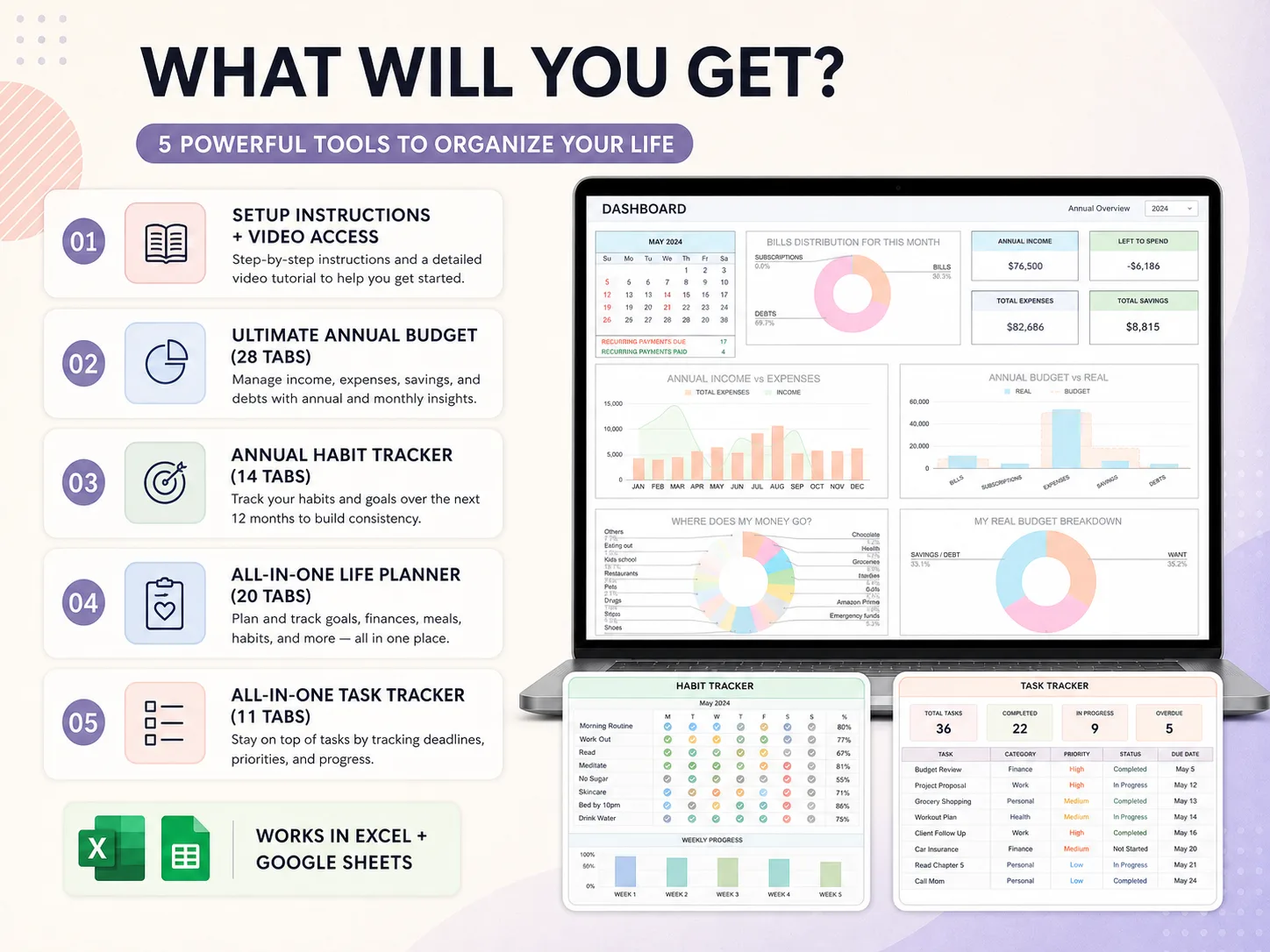
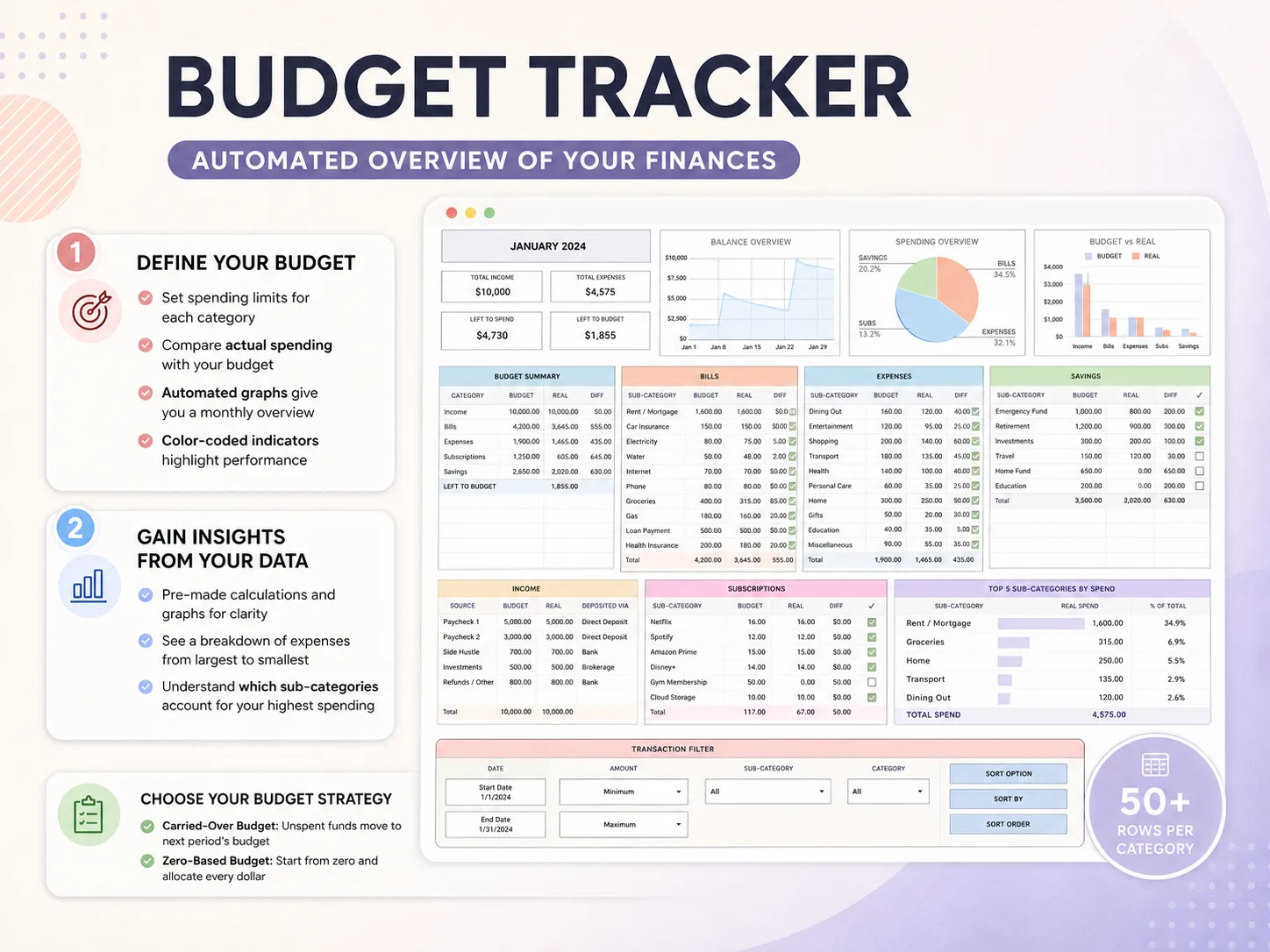
The Ultimate Life Organizer from ultimatelifeplanner.site is a ready-made Excel and Google Sheets file for $9 once. It has four spreadsheets and 70+ tabs: a Budget Planner, an Annual Habit Tracker, a Life Planner and a Task Tracker. We sell it, so read the next part with that in mind.
Best for: anyone replacing three or more apps who wants one file to own. A life planner spreadsheet for money, tasks, meals and goals comes already set up.
What you give up: push reminders, bank sync and a mobile app. It has none, and typing on a phone is slower than in an app.
What Does a Life Planner Really Cost Over Three Years?
A life planner costs between $0 and about $500 over three years, and the cheapest options are not always the easiest. The spread is wide because paper and apps renew every year, while a file you own does not.
- Paper: $97.50 to $202.50 for Erin Condren across three yearly books, $120 to $135 for Passion Planner.
- Apps: $507 for Todoist Pro and YNAB together at yearly prices.
- Notion and Google Sheets: $0 in cash, plus the hours you spend building.
- Ready-made file: $9 once, then nothing in year two and three.
Prices change, so check the vendor page before you buy. We did not count the value of your time, because it differs considerably for everyone, and for some people the building hours are the entire point.
What Matters More Than Features When You Choose?
Features matter less than how many times you retype one fact. Take rent: in a paper planner you write it every month or every week. With two apps it may live as a reminder in one and a budget line in the other. In a connected spreadsheet you enter it once as a recurring payment, and the calendar and the budget both read from that single row, which removes the maintenance that usually causes people to abandon the whole arrangement.
A planner that asks for fewer repeat entries is the one that survives a busy week. Planning also works when it is specific: a meta-analysis by Gollwitzer and Sheeran found that plans naming when and where you will act had a medium-to-large effect on reaching goals (d = .65, 94 tests). Put the plan somewhere you will definitely see it. If you have quit planners before, that usually says more about the setup than about you. Our guide to which life planner format gets used walks through that with a cost table.
Two habits help with any pick: book a weekly 20-minute review at a fixed time, and start with one area, usually money or tasks, adding the rest after a month. A spreadsheet life planner with a ready-made dashboard gives you that first view without building it.
Why Trust This Article
We are the Cosmo Suite team that builds and sells the Ultimate Life Organizer, so we have a stake in this topic. Where paper or apps fit better, we say so.
Methodology: Erin Condren, Passion Planner and Notion prices were read on each vendor's page on 8 October 2026. Todoist, YNAB and Google Sheets were read on 4 October 2026. Prices change, so verify before you buy. Read more about us and how we write in our editorial policy, or contact us through the site footer if you spot a price that has changed.
Where the Ultimate Life Organizer Fits
The Ultimate Life Organizer, sold by Cosmo Suite at ultimatelifeplanner.site, is the one-place option in the list, built for Excel and Google Sheets.
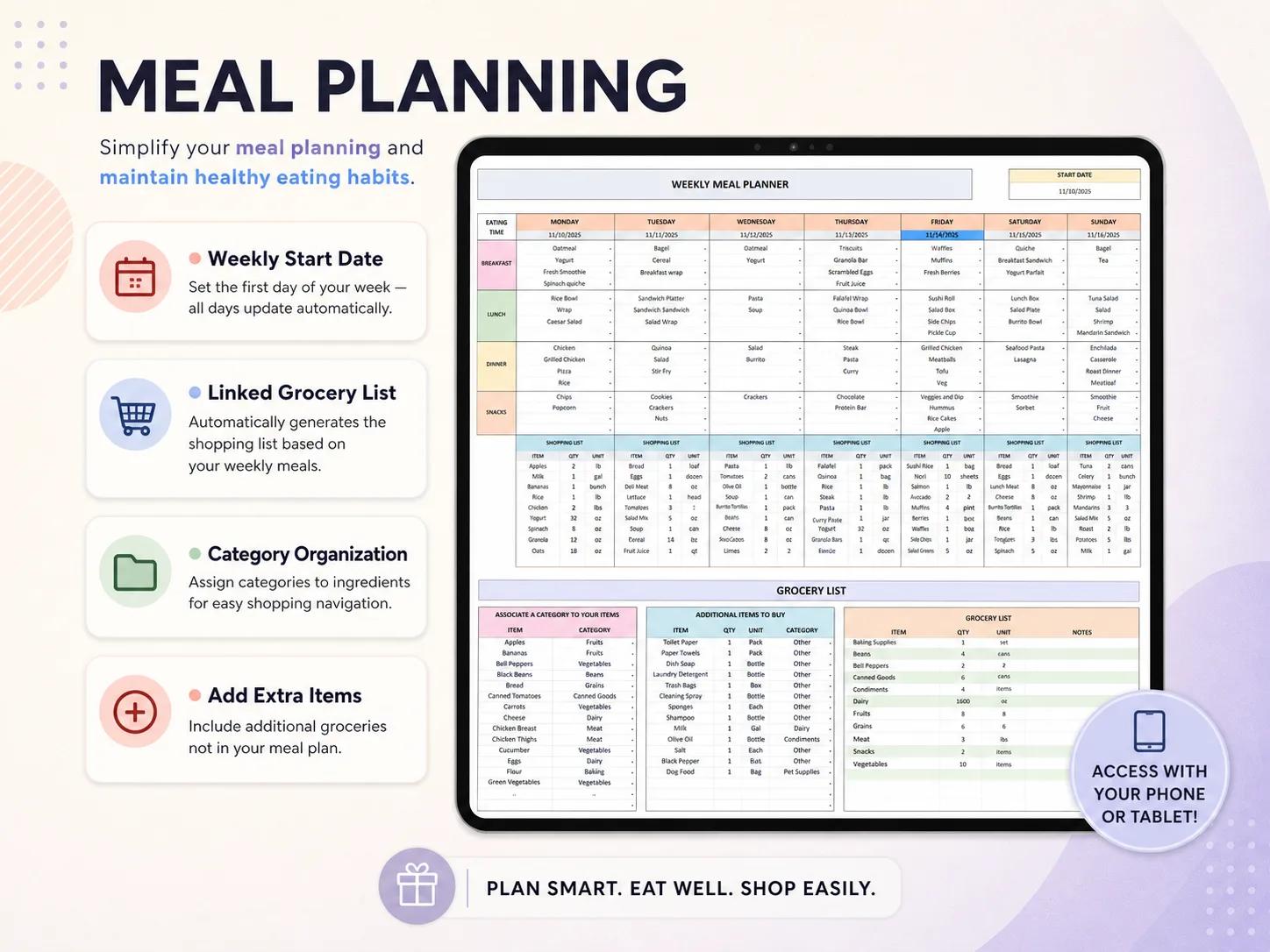
The all-in-one dashboard has finance, organization and wellness sections. Monthly and weekly calendars fill themselves in, and a goal tracker shows progress bars. Recurring automations handle income, bills, debts and subscriptions at 7 frequencies. You also get 12 monthly habit trackers, fitness, weight and hydration trackers, a weekly meal planner with a grocery list, and a task dashboard. A step-by-step YouTube tutorial walks through setup.
It costs $9 once, has no subscription, and works year after year. It does not send reminders, so keep an app for that one job if you need it. See the tabs of the Excel and Google Sheets life planner bundle before you decide.
Frequently asked questions
What is the best life planner overall?
It depends on how you plan. For thinking by hand, a paper planner such as an Erin Condren LifePlanner or a Passion Planner is hard to beat. If money, meals, habits and goals live in different apps, one connected file is easier to keep current. Pick the one with the fewest places to update.
What is the cheapest good life planner?
A Notion free plan or a Google Sheets file you build yourself costs $0, but you pay in setup time. A ready-made spreadsheet bundle is the cheapest finished option. The Ultimate Life Organizer is $9 once, against $97.50 to $202.50 over three years for a yearly paper planner.
Is a digital life planner better than a paper one?
Neither wins for everyone. Paper suits people who think by writing and want no notifications. Digital suits people who need math done for them, such as budget totals or progress bars. Many people keep paper for daily tasks and a spreadsheet for money and goals.
Can Google Sheets work as a life planner?
Yes. Google Sheets is free with a Google Account, and it handles budgets, calendars, habit logs and goal trackers well. The catch is building the tabs and formulas yourself. A ready-made file skips that step. Neither option sends push reminders.
How often should I replace a paper life planner?
Once a year for dated planners, which cover 12 months. Undated planners last until the pages run out, which depends on how much you write. Either way, last year's planner cannot carry goals or recurring bills into the new one, so you copy them over by hand.
How long does it take to start with a spreadsheet life planner?
Plan on one evening for the first setup: recurring bills and income, a few habits, one or two goals. After that, a weekly 20-minute session covers tasks, dinners and the grocery list. The setup is the long part, so a file that already has the tabs saves most of that evening.
Sources
- U.S. Bureau of Labor Statistics: American Time Use Survey, 2025 results
- Gollwitzer and Sheeran (2006): Implementation intentions and goal achievement, a meta-analysis
- Erin Condren: LifePlanner
- Erin Condren: Softbound LifePlanner
- Passion Planner: Paper Planners
- Notion: Pricing
- Todoist Help: Todoist Pro pricing update
- YNAB: Pricing
- Google Workspace: FAQ (free consumer apps)