Decision Fatigue: A Weekly Plan for Fewer Daily Choices
Decision fatigue can make routine choices feel harder. Use a weekly review to group repeat decisions, choose defaults, and leave room for what changes.
By Ultimate Life Organizer by Cosmo Suite · Editorial policy
Published · 8 min read
General information, not medical or mental health advice.
If every ordinary choice feels like one more task, you may start calling it decision fatigue. The label can be useful shorthand, but research does not support treating every stalled choice as the same problem. The practical question is smaller: which decisions keep returning, and which ones can you settle ahead of time?
A weekly review can help you group repeat choices, set a few temporary defaults, and leave important or changing decisions open. This is a planning routine, not a treatment or a promise that you will feel less tired. The idea is to make the next decision easier to find when your week gets busy.
Decision fatigue at a glance
Decision fatigue is a common phrase for feeling depleted after repeated or demanding decisions. Research definitions vary. A 2025 systematic review included 82 studies of healthcare professionals; 45% of cases that quantitatively tested the decision-fatigue hypothesis found significant effects (systematic review, 2025). Those studies do not show whether a household planning routine changes decision quality. Treat this review as context, not proof that a weekly review works.
| Decision type | Example | What to settle during the week | Leave open when |
|---|---|---|---|
| Repeats on a schedule | Which night to review the week | Pick one review time that usually works | Work or care schedules change often |
| Low stakes and repeatable | A familiar weekday breakfast | Keep one or two easy defaults | You want variety or the default stops working |
| Depends on current information | Whether to book an appointment | Write down the information to check | You do not yet have the facts |
| High impact | A job, housing, or financial choice | Set a next research step or decision date | You need advice or more time |
Use defaults to avoid reopening the same question. Leave choices open when the answer depends on new information. A March 2026 Real Simple article syndicated by Yahoo recommends grouping repeat decisions and building routines, while ThoughtCo's overview notes that choice-overload findings do not apply in every situation. Use a default only when it still fits.
What does a weekly decision review do?
Use a weekly decision review to put recurring questions in one place and consider them once. You may notice that the same choice keeps taking attention each day. Then decide if a simple default would help for the coming week.
Set aside a short period you can repeat. Open a notebook, calendar, or task list and write the decisions you expect to face more than once. Keep this to ordinary planning choices such as meals, errands, when to check a shared calendar, or which personal task to start with. Do not use the list to store passwords, account numbers, or private records.
For each repeat choice, write three things:
- The question: What keeps coming up?
- A temporary default: What would work for now, if nothing changes?
- A review point: When or what would make you reconsider?
For example, a temporary meal default might be to choose two familiar dinners before the week starts. The review point could be a late work shift or a grocery item being unavailable. You can still change the plan when new information arrives.
You can use the same idea for checking your calendar or choosing a task after work. Pick a time that fits your day. The AMA's 2025 guidance discusses routines as one option for reducing repeated choices. It does not set a schedule for everyone.
If you are sorting several personal planning areas, the life planner guide shows how different formats can hold a weekly plan. Use the format you already return to when that is easier. A single set of planning spreadsheets is another way to keep recurring personal areas together.
Which decisions belong in a default?
Use a default for low-stakes decisions that repeat and have a clear exception. Keep choices open when they depend on new information, affect other people, or carry consequences that deserve careful thought.
A default is a starting point with an exception you can change. Examples include keeping a short list of familiar meals, reviewing upcoming dates at the same point each week, or setting aside one block for errands. Write down when you would change the default so you do not have to decide from scratch.
Keep a decision open when it still needs your judgment. You may want to ask someone else for input, check a deadline, compare costs, or speak with a qualified professional. A planning system can hold the next step. It cannot tell you which medical, legal, or financial choice is right.
One useful test is to ask: “Would I be comfortable using this default again next week if nothing important changed?” If not, keep the question open and write down what information would help you decide. That turns a vague loop into a task with a next step.
How can you build a lighter week?
Start with dates that are already fixed, then choose a small number of repeat defaults around them. Leave open time for changes and do not fill the week with tasks just because a planner has room.
Try this order during your review:
- Add fixed commitments. Use confirmed appointments, deadlines, and events. Keep the source calendar you trust as the official one.
- Pick a few repeat choices. Choose only the decisions that you found yourself reopening last week. Meals or an errand block are common examples.
- Name the next action for open decisions. If you need information, write what to check and when you can check it.
- Leave capacity for changes. Keep some time unassigned instead of planning every hour.
- Choose a review point. Revisit the defaults when the week changes or during your next planned check.
Here is a constructed example. Imagine a person has a changing work schedule, a grocery run, and a personal project. They mark confirmed shifts first. They choose two familiar dinners for the nights they are home, leave the other nights open, and set a reminder in the calendar they already use to check the next week's shifts. They do not decide the project deadline until they confirm when a needed resource will be available.
Treat the plan as a snapshot. If the schedule changes, the meals and task block can move. Writing a default beside its exception makes the plan easier to update without repeating the whole review.
What can make the review feel like more work?
A review becomes another burden when it asks you to optimize every part of your day or maintain several copies of the same plan. Keep only the questions that return often enough to be worth settling once.
Watch for these signs that the routine needs trimming:
- You are building a system before you have identified a repeat decision.
- You copy the same appointment into several calendars and are unsure which one is current.
- Your defaults no longer fit your schedule or preferences.
- The weekly review takes longer than the choices it was meant to simplify.
- You treat a missed plan as a reason to start over from scratch.
Keep the review focused on the next week. If you miss it, use the current date and make the next useful choice. You can also drop a default that no longer saves effort. Build a plan you can return to after an uneven week.
The concept itself has limits. ThoughtCo describes the debate around choice overload and ego-depletion research. A 2025 systematic review of healthcare professionals reported mixed findings and inconsistent measures. Those results concern clinical settings, so they cannot tell us whether a household planning routine changes anyone's decision quality. This guide offers a way to organize repeat choices, not evidence of a health benefit.
What helps when a choice still feels hard?
When a decision still feels hard, write down the next information you need and whether the choice can wait. If it has serious consequences or the difficulty keeps affecting daily life, involve a qualified person rather than relying on a planner.
For a low-stakes decision, you might narrow the options to a few that meet your needs and choose a time to decide. For a decision that depends on facts, write a short list of what to verify. If the choice can safely wait, note when you will return to it. These steps organize the process without claiming to make the answer obvious.
The American Medical Association's article includes expert guidance about routines and taking a pause when overwhelmed. Advice from clinicians in a news article is not a personal assessment. If difficulty deciding is persistent or comes with broader distress, speak with a qualified health professional.
If you are weighing different planning formats, the life planner comparison covers paper, apps, and spreadsheets. A digital tool may suit you when you need reminders or updates while away from home. A spreadsheet can hold information together but does not send alerts or sync with a calendar by itself.
Why Trust This Article
Cosmo Suite sells the Ultimate Life Organizer described here. Product details were checked against the product contents list on 22 October 2026. The weekly review and the example are editorial suggestions, not clinical guidance or measured results. The sources were checked on 22 October 2026; the systematic review is limited to healthcare professionals and should not be generalized to household planning.
Where the Ultimate Life Organizer Fits
The Ultimate Life Organizer from ultimatelifeplanner.site is a $9 one-time bundle with Budget Planner, Habit Tracker, and Task Tracker spreadsheets, plus Notion Life OS. The spreadsheets work with Excel and Google Sheets. These are planning tools, not a mental health product or a system that makes decisions for you.
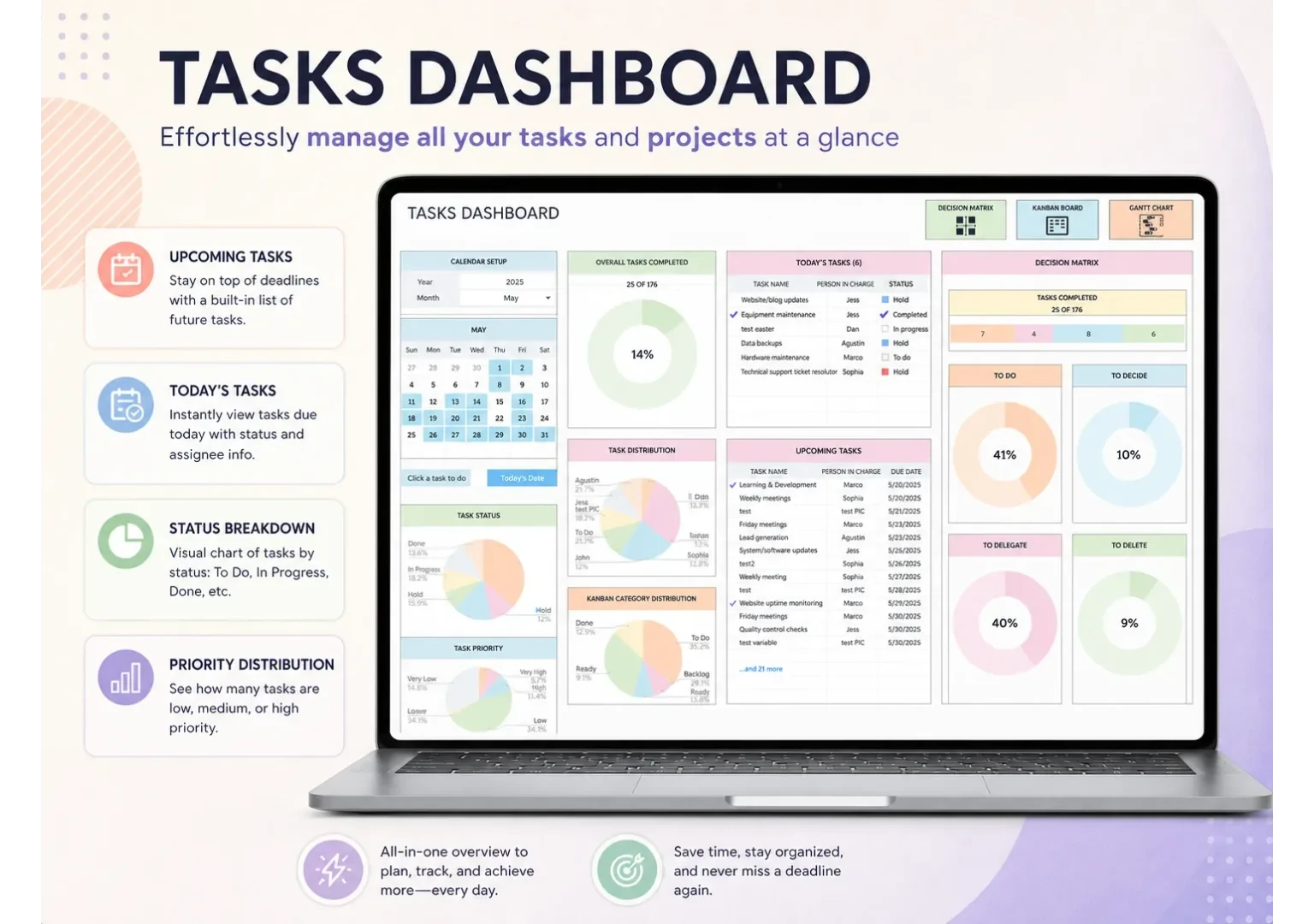
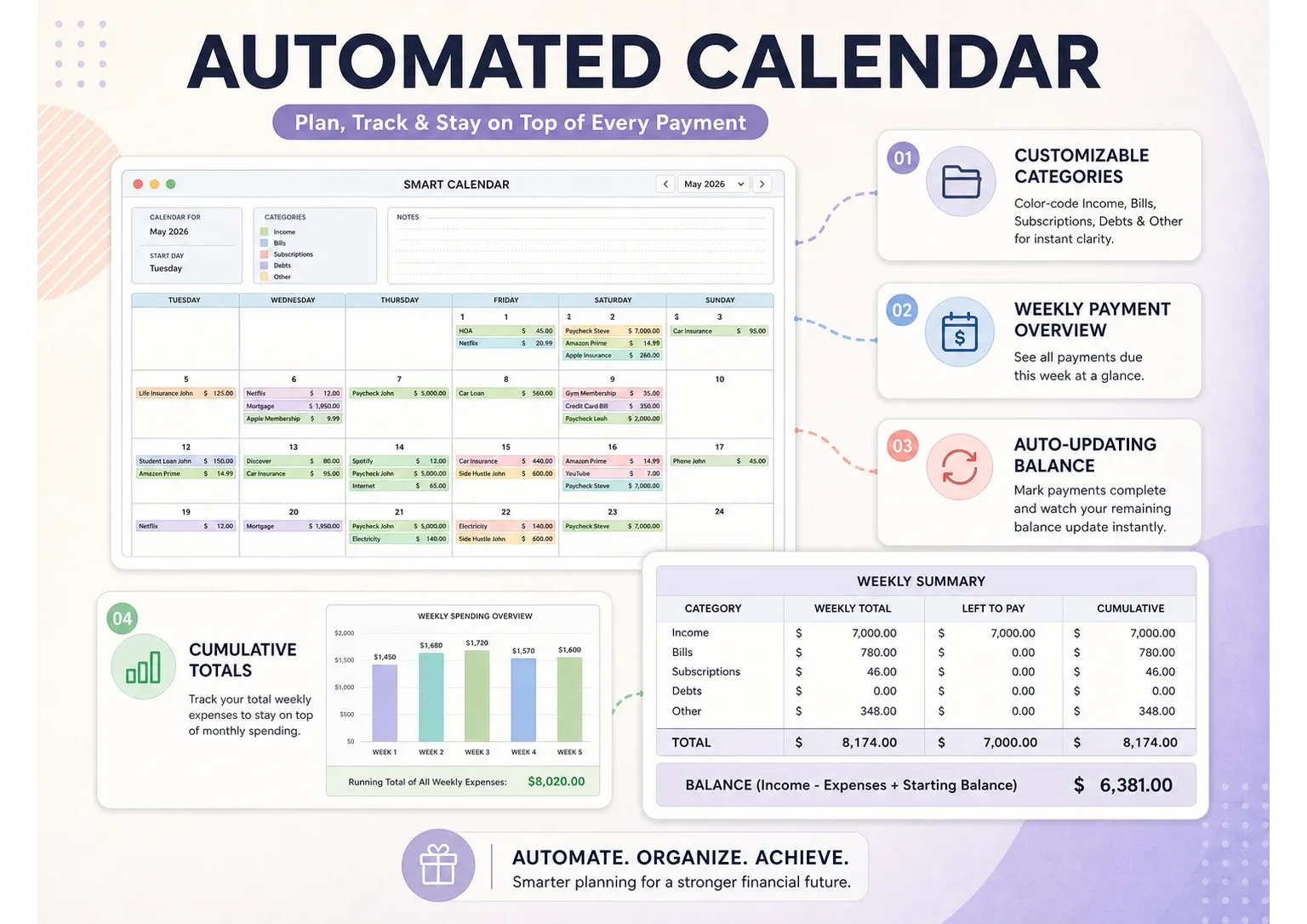
The Task Tracker dashboard summarizes tasks and status. The Budget Planner payment calendar shows scheduled income and bills. The Ultimate Life Organizer overview lists the bundle details so you can decide whether this format fits.
The bundle does not provide reminders, notifications, bank sync, or a mobile app. You can use the file with Excel or Google Sheets, then decide how often to review it. A paper planner or an existing calendar may fit better if you need a physical view or automatic alerts.
For a broader reset, the weekend life-planning guide walks through gathering tasks and dates before choosing what to do next. If a spreadsheet is your preferred format, begin with the sections you will actually check and leave the rest alone.
Frequently asked questions
What is decision fatigue?
Decision fatigue is a common term for feeling worn down by repeated or demanding choices. It is not a formal diagnosis. Research uses the term in different ways, so this guide focuses on practical planning rather than diagnosis or treatment.
How do I make fewer decisions each day?
Choose a few repeat decisions during a weekly review, such as which meals to keep simple or when to check your calendar. Write down the default and the point when you will review it again. Keep choices that need fresh information open.
Can decision fatigue be a symptom of ADHD?
Feeling worn down by choices does not diagnose ADHD. A qualified health professional can assess ADHD symptoms. This article offers general planning information, not a diagnosis or treatment.
Should I make important decisions in the morning?
There is no universal best time for every person or decision. When you feel tired or rushed, you can pause a decision that can wait, gather the information you need, and return to it at a time that suits you.
Can a planner prevent decision fatigue?
A planner can gather dates, tasks, and repeat choices in one place. It cannot remove difficult decisions or treat a health condition. Use the format you can access and maintain, whether that is paper, a calendar, an app, or a spreadsheet.
How often should I review my routine?
Start with one weekly check and revisit a default when your schedule or needs change. You do not need to plan every detail. Keep the parts that save you repeated effort and remove the ones that add work.
How can I avoid a rushed decision?
If a decision can wait, write down what you need to check and choose a time to return to it. For a decision with serious consequences, seek qualified advice when needed. A planner can track the next step, but it cannot assess the decision for you.
Sources
- Yahoo syndication of Real Simple: Here's What Decision Fatigue Does to Your Brain, and How to Protect Your Energy
- ThoughtCo: What Is Decision Fatigue? Definition and Examples
- Systematic review of the effects of decision fatigue in healthcare professionals on medical decision-making
- American Medical Association: What doctors want patients to know about decision fatigue
